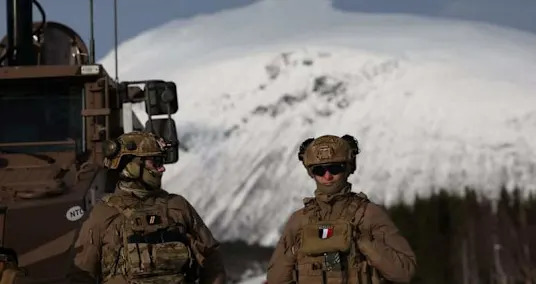
Sources told The Jerusalem Post that the decision was a result of France taking a hostile attitude toward Israel over the last two years.
Israel has halted selling defense products to France, three senior Israeli sources confirmed to The Jerusalem Post on Tuesday.
Defense Minister Israel Katz formally ordered the halt, but a decision of such significance could only happen if it was a priority of Prime Minister Benjamin Netanyahu.
Sources told the Post that the decision was a result of France taking a hostile attitude toward Israel over the last two years, forcing it to reevaluate how much it could trust sharing its defense products with the country.
It was unclear exactly how the decision would impact the countries, given that France has been boycotting Israeli weapons since mid-way through the Israel-Hamas War in Gaza, and given that a source clarified that existing contracts would be honored and private companies could still make deals.
Israel may still purchase defense products from France
While economic ties between the two nations remain intact, defense cooperation has cooled significantly. Also, Israel may still purchase defense products from France if Paris is open to that, though this has also been reduced in recent years.

However, for larger deals requiring government-to-government involvement, and even for Israeli products that have only defensive characteristics, France may lose significant opportunities.
Germany and other NATO countries have been jumping to purchase Israeli air defense and other systems in response to new threats posed by Russia since Moscow began its still ongoing war to try to take over Ukraine in 2022.
Some of the major points of friction between Israel and France have been over Paris's push to end the Gaza war prior to a point where Israel's government believed it could bring Israeli hostages home and keep Hamas down as a future threat.
France led a wave of countries recognizing a Palestinian state in September 2025, viewed in Jerusalem as a penalty for continuing the war.
In addition, France has pressured Israel to reduce its attacks on Hezbollah during the 2023-2024 conflict, while full hostilities were reduced but not gone in 2024, and during the current conflict.
Despite the disagreements, France helped defend Israel from Iranian missiles and drones in 2024, and the countries are still cooperating in various intelligence and other capacities. For example, France helped snap back global nuclear sanctions on Iran in the summer of 2025.
Nevertheless, President Emmanuel Macron halted the flow of French weaponry to Israel in late 2024, citing the humanitarian toll of the war in Gaza and for the past two years has blocked Israeli defense companies from exhibiting at arms fairs in the country.
Anna Ahronheim contributed to the report
LATEST POSTS
- 1
 Airport wait times won't return to normal until Congress reaches a deal to pay TSA. Here's why they still can't come to an agreement.
 - 2EU calls on Western Balkans to step up reforms for membership
- 3Bowen Yang is reportedly leaving 'Saturday Night Live' after this week's episode
- 44 astronauts are en route home from ISS after medical issue forces early exit
- 5New nesting beach for birds at RSPB reserve



- Mom finds out she has cancer after noticing something was off while breastfeeding
- What to know about new CDC deputy director who has been critical of COVID vaccines
- Qantas and Virgin Australia Ban Power Bank Usage on Flights Following Safety Incidents
- China Just Got Another Cheap EV America Would Love to Have
- Pfizer in $41.5 million settlement with Texas over ADHD drug for children
- How did this 20-light-year-wide 'Diamond Ring' form in space? Maybe a cosmic bubble burst
- Philippines evacuates 3,000 villagers after volcano activity raises alert level
- Burger King launches 'SpongeBob' menu ahead of film's release. A look at the Bikini Bottom-inspired meal, plus what taste testers are saying.
- As cases of a rare, deadly infection rise, doctors worry fewer teens will get vaccinated