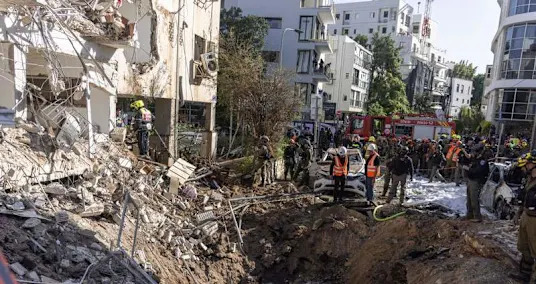
Iranian missile attacks on Israel struck several locations in the greater Tel Aviv area on Thursday morning, according to the Israeli military.
Six people were injured in the predominantly Arab town of Kafr Qasim, east of the coastal city, Israel's Magen David Adom emergency service said.
Emergency crews arrived within minutes of the impacts and found significant damage to a building, with injuries caused by the blast wave, a medic said. The wounded were treated at the scene before being taken to hospital.
Additional rocket fire targeting the Tel Aviv area was reported from Iran as well as from Lebanon overnight, according to local media.
Iran fired five waves of missiles towards Israel over the course of some two hours on Thursday morning, according to military sources.
Sirens sounded in numerous areas of Israel, including the Tel Aviv area, Jerusalem and the north of the country, with impacts reported in several locations, according to the army and emergency services.
LATEST POSTS
- 1
 Earthquake in Indonesia kills at least 1 person and sets off small tsunami
 - 25 Family SUVs for 2024: Which One Accommodates Your Family's Needs\uff1f
- 3The newest 'Project Hail Mary' trailer shows Ryan Gosling befriending an alien in Phil Lord and Chris Miller's space epic
- 4Family Holiday spots
- 5Geminid meteors streak under green sky | Space photo of the day for Dec. 19, 2025


- Lecturer who called Israel a terrorist state to remain Plaid Cymru candidate
- Japanese H3 rocket fails during launch of navigation satellite (video)
- Air travelers face higher ticket prices as Iran war drives up oil prices
- Israeli president concerned over proposed renaming of park
- The Most recent Microsoft Surface Genius PC: Ideal for Very good quality Planning and Gaming Needs
- Scientists Just Discovered Japan’s First New Bird Species in Over 40 Years
- Health Rounds: Regeneron drug wipes out residual multiple myeloma cells in small trial
- Manual for 6 Busssiness Class Flights
- Cyprus urges hotels to open up, pours funding into tourism