When you buy through links on our articles, Future and its syndication partners may earn a commission.

Update for 7:40 p.m. ET on Dec. 19: Innospace has called off today's planned launch of the Spaceward mission due to a technical issue. A new target date has not yet been announced.
South Korean startup Innospace is set to attempt its first orbital launch today (Dec. 19), and you can watch the action live.
Liftoff is currently scheduled for 7:30 p.m. EST (9:30 p.m. local time and 0030 GMT on Dec. 20) from the Alcantara Space Center in Brazil. Innospace's Hanbit-Nano rocket will aim to insert five small satellites for customers from Brazil and India into a 186-mile-high (300 kilometers) orbit and mark a first for a private Korean company.
Watch it live here at Space.com, courtesy of Innospace, or directly via the company. Coverage will begin at 6:30 p.m. EST (2330 GMT).

"Hanbit-Nano has been successfully rolled out from the integration facility and transported to the launch pad ahead of liftoff. Preparations for the Spaceward mission are right on track," Innospace said Wednesday (Dec. 16) in a post on the social media platform X.
The 57-foot-tall (17.3 meters) rocket is designed to be able to launch 198 pounds (90 kilograms) into a sun-synchronous orbit from Brazil. The rocket's first-stage hybrid engine burns paraffin and liquid oxygen while the upper stage uses methane and liquid oxygen or paraffin and liquid oxygen, depending on its configuration.
Innospace CEO Kim Soo-jong told Space.com at the International Astronautical Congress in Sydney, Australia, in October that the company was established in 2017 and employs 260 people.
"All of our technology is developed by ourselves. The engineers are Korean, and the development is fully indigenous," Kim said. "Korea has built an ecosystem to develop a launch vehicle. We work with more than 100 supply-chain companies in South Korea," he added.
Kim said Innospace is very focused on the global market. "We already have around 14 contracts with global satellite companies."
A lot is riding on this first launch. Kim said that Hanbit-Micro, an advanced model of Hanbit-Nano that can carry 375 pounds (170 kg) to orbit, is set to begin commercial flights early next year, should all go according to plan.
Today's launch was originally scheduled for Wednesday (Dec. 17), but Innospace pushed it back two days to replace a part in the cooling system of the rocket's first stage.
LATEST POSTS
- 1
 Gov’t approves millions for border cities in North under Hezbollah fire
 - 2Find Your Internal Culinary expert: Cooking Strategies and Recipes
- 3What's going on with Katseye? The Manon Bannerman hiatus drama, explained.
- 4Surveys of Thrillers That Re-imagined the Class
- 5Remain Fit and Sound with These Exercise Fundamentals





- Don’t let food poisoning crash your Thanksgiving dinner
- Father and son spending Christmas together after health scares
- New peace laureate: Iran's arrest of Mohammadi 'confession of fear'
- 6 Trail blazing Bicycles for Rough terrain Undertakings
- Commonsense Ways to work on Your Funds with a Restricted Pay
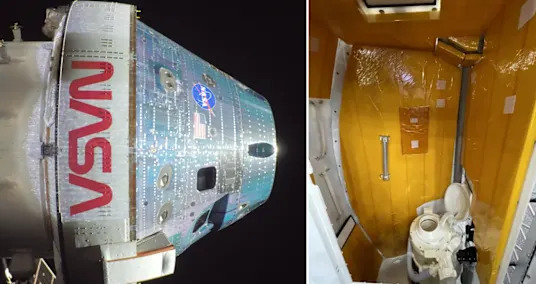
- The breakout star of NASA's Artemis 2 moon mission isn't an astronaut — it's the space toilet
- Avoid This Common Mistake When Planning Sightseeing Activities For Your Trip To Italy
- Investigating Free Cell Phones: What You Really want to Be aware
- Rescuers give up hope for the humpback whale stranded in the Baltic Sea